Home Salon Hygiene Checklist: What to Ask Before a Beauty Professional Arrives
A good home-salon hygiene check is practical rather than dramatic. Look for clean hands, a clean working surface, properly cleaned reusable tools, fresh towels or linens, sensible handling of single-use items, and products that are stored and used cleanly.
You can ask a provider how reusable tools are cleaned between clients. If there is an active infection, open wound, severe irritation or another concerning skin/nail problem, postponing the cosmetic service may be more appropriate.
A home beauty appointment should feel clean and professional, but it should not be marketed as a sterile medical environment unless the business genuinely operates a verified medical sterilisation process.
What a clean at-home setup should look like
When the professional arrives, the working area should become more organised—not more chaotic.
A clean setup usually includes:
- a clean or freshly prepared work surface;
- tools stored in a clean way;
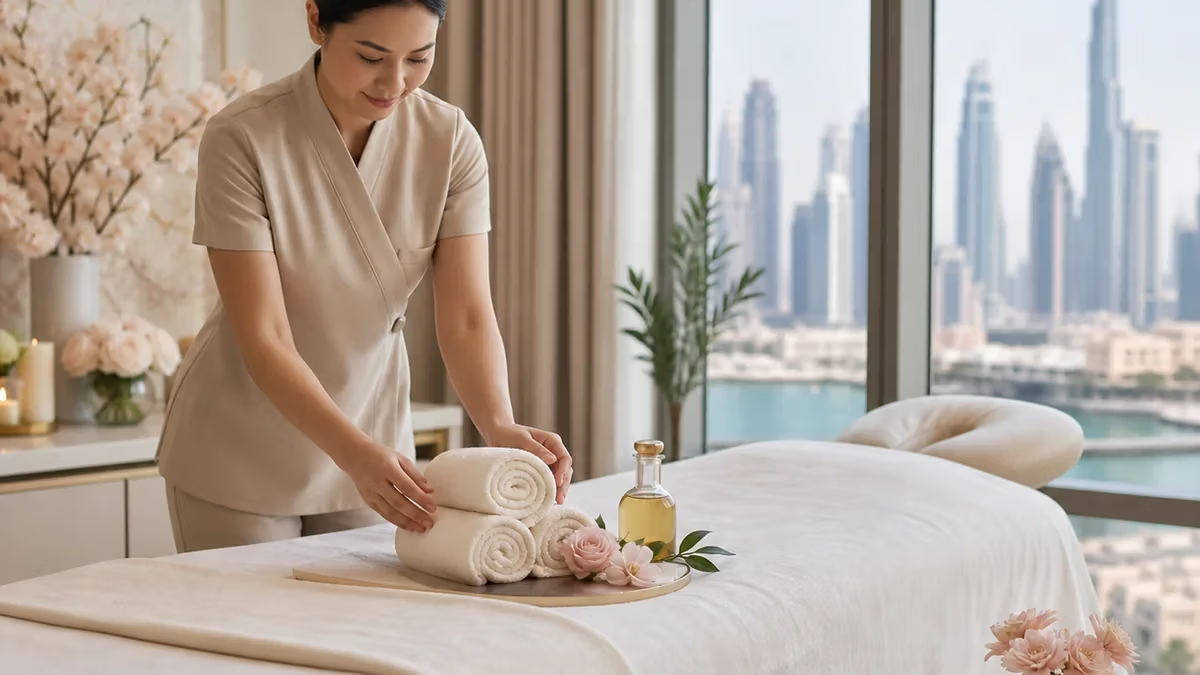
- fresh towels or service linens where needed;
- separate handling of clean and used items;
- products that are closed and stored appropriately;
- and a clear place for waste or used disposable items.
The professional should also clean or sanitise hands appropriately before the service.
You do not need to inspect the appointment like a laboratory. Basic observable cleanliness tells you a lot.
Reusable tools: what should happen between clients?
Reusable tools need an appropriate cleaning and disinfection process between clients.
For nail services, the American Academy of Dermatology advises clients to ask how tools are cleaned and to look for cleaning and disinfection between customers.
The exact process depends on the tool material and service.
A website should be careful with words such as sterilised, sanitised, disinfected and cleaned because they do not all mean the same thing.
If Home Salon says tools are sanitised, the operations team should be able to explain what that means in practice.
Do not upgrade a marketing phrase into “medical-grade sterilisation” unless that process is genuinely verified.
Single-use items and fresh towels
Some beauty items are designed for one client and should not be reused.
The exact list varies by treatment. Waxing, facial, nail and threading services do not use identical supplies.
A clean provider should know which items are single-use and how used items are discarded.
Towels and linens should be fresh or appropriately laundered for each client.
At-home service has one advantage here: the client can observe much of the setup directly.
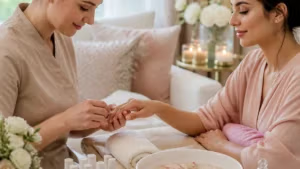
Nail-service hygiene questions
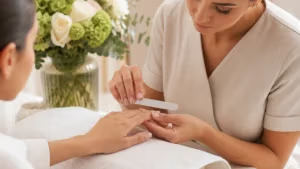
Nail care deserves special attention because the service works closely around cuticles and skin.
AAD warns against cutting cuticles because cuticles protect the nail root and surrounding skin from infection.
A client can ask:
- Are reusable tools cleaned and disinfected between clients?
- Are files/buffers single-use or professionally managed?
- Are towels fresh?
- How are used items separated?
- What happens if there is a cut, painful nail or suspected infection?
- Does the technician avoid covering a concerning nail problem with artificial product?
Home Salon currently says its nail technicians bring sanitized tools and clean products for the selected service.
That claim should match the real operational process.
Waxing, threading and facial hygiene
These services involve close contact with skin, so clean hands, clean working surfaces and sensible product handling matter.
Waxing also involves product containers and applicators. A high-quality provider should use a method that avoids contaminating shared wax products.
Threading is simpler in equipment terms, but the thread and surrounding work area still need hygienic handling.
Facials often involve several products, towels and applicators, so the provider should prevent cross-contamination between clean products and used items.
The consumer does not need to know every professional protocol. She only needs enough information to recognise a clean, organised service and ask reasonable questions.
Hair-service hygiene is different
Hair services use combs, brushes, clips, bowls, brushes for colour and heated tools.
The main risks and cleaning requirements are different from nails or waxing.
For hair colour, product safety and allergy history are also important. A clean brush does not make a hair dye suitable for someone who previously reacted to the product.
That is why hygiene should be one part of the consultation rather than the only trust signal.
Questions you can ask without making the appointment awkward
Hygiene questions are normal.
You can simply ask:
- “How are your reusable tools cleaned between clients?”
- “Are these items fresh for each appointment?”
- “Do you bring clean towels or should I prepare my own?”
- “What happens if the technician notices a skin or nail problem?”
- “Are the products used for this service single-client or shared professional products?”
A confident professional should be able to answer without becoming defensive.
The goal is not to accuse anyone. It is to understand the process.
When to postpone a beauty service
A cosmetic appointment should not go ahead automatically when the skin or nail area looks unhealthy.
Consider postponing and seeking appropriate healthcare advice when there is:
- an open wound in the service area;
- obvious infection;
- significant swelling;
- severe pain;
- a new unexplained rash;
- blistering;
- or a previous serious reaction to a product that may be used again.
A beautician should not be asked to diagnose the condition.
The safest approach is to protect the area and get the correct assessment before applying more cosmetic product.
What Home Salon currently says about hygiene
Home Salon’s homepage currently highlights a “fresh kit” and “sanitised tools” as part of its hygienic setup.
Its Nails page says technicians arrive with sanitized tools, product setup and clean towels for the service.
Those are useful trust signals, but the strongest operational standard is consistency: the cleaning/disinfection practice described online should be the one clients actually see at every appointment.
For practical room preparation, read our Home Salon Appointment Preparation Checklist.
Hygiene is not the same as medical sterility
This distinction protects both customers and the business.
A beauty professional can maintain a high standard of cleaning, disinfection, fresh linens and single-use supplies without claiming to operate a sterile medical field.
Medical sterilisation has specific technical meanings and processes.
Using the word casually can create a promise that the service cannot support.
For an at-home salon, it is better to be precise: clean setup, appropriately disinfected reusable tools, fresh linens and correctly managed single-use items.
A simple six-point hygiene check
Before or at the start of the appointment, look for:
- Clean hands.
- Clean work surface.
- Reusable tools managed appropriately.
- Fresh towels/linens where relevant.
- Single-use items handled correctly.
- No attempt to perform cosmetic service over obvious infection or open injury.
That is enough for most clients to make a sensible trust assessment.
For the wider appointment decision, see Home Salon vs Salon Visit and the guide to booking multiple beauty services at home.
Home Salon’s main service website is the commercial source for current service availability, booking and location coverage.
Frequently asked questions
Should all home-salon tools be disposable?
No. Many professional tools are reusable and should be cleaned/disinfected appropriately between clients. Some items are designed for single use.
Is “sanitised” the same as sterilised?
No. These terms have different meanings. A business should use the term that accurately describes its real process.
Should nail cuticles be cut?
AAD advises leaving cuticles alone because they protect the nail root and surrounding skin from infection.
What if I have a cut or rash?
Tell the provider. If the area is significantly irritated, infected, painful or open, postponing the cosmetic service may be safer.
Does Home Salon bring clean tools?
Home Salon currently states that its professionals use a hygienic setup and that nail technicians bring sanitized tools. The business should ensure those claims match its actual process.